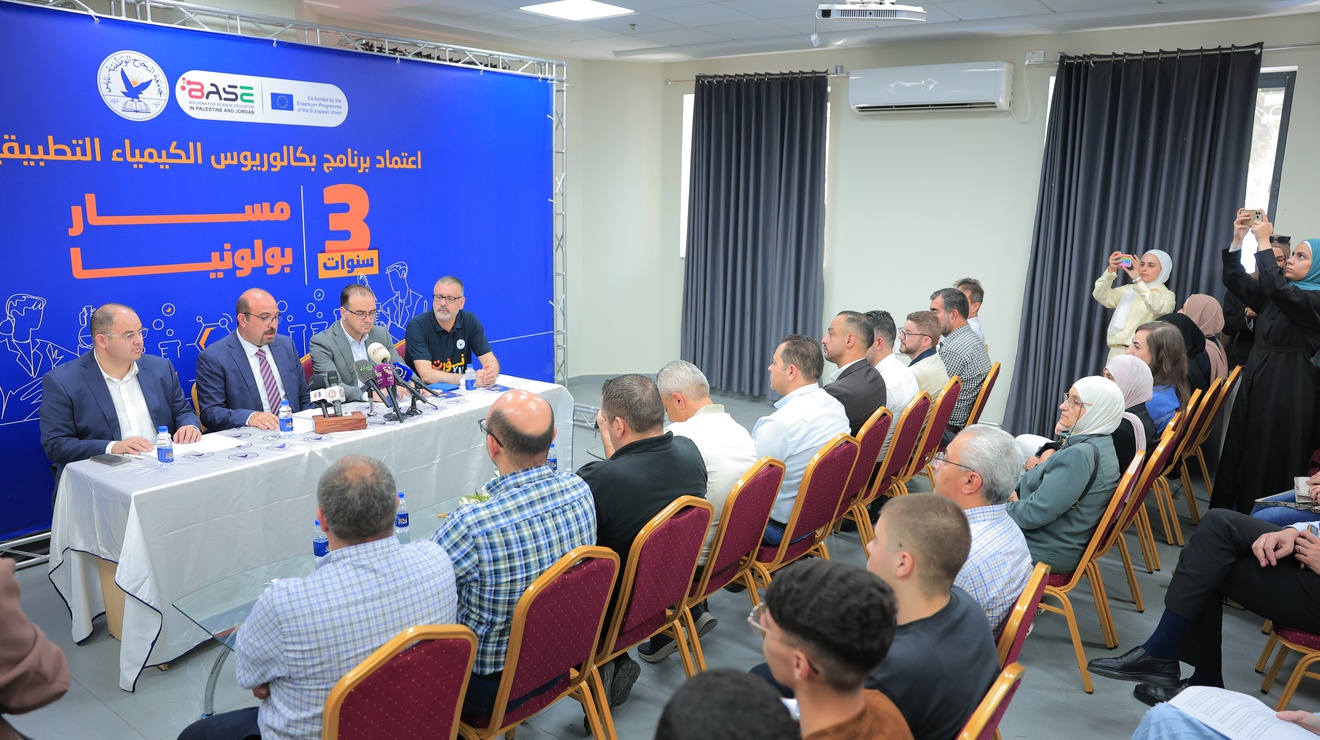
Nablus, 28 August 2025 – An-Najah National University hosted a distinguished delegation from the European Union Office, the Erasmus+ National Office in Palestine, and the National Accreditation and Quality Assurance Commission for Higher Education Institutions, as part of an official monitoring visit for the BASE Project (Bologna for Science Education in Palestine and Jordan).
The visiting delegation included Mr. Federico Foty, Erasmus Programme Manager and Director of the Direct Financial Support Programme (PEGASE) and Education Cooperation at the EU Representative Office in the West Bank, Gaza, and UNRWA; Mr. Moammar Eshtayeh, President of the Accreditation and Quality Assurance Commission; Mr. Eyad Abu Samra, Accreditation Commission Coordinator; and Dr. Amir Khalil, Director of the Erasmus+ National Office in Palestine, alongside representatives from the Ministry of Higher Education and Scientific Research.
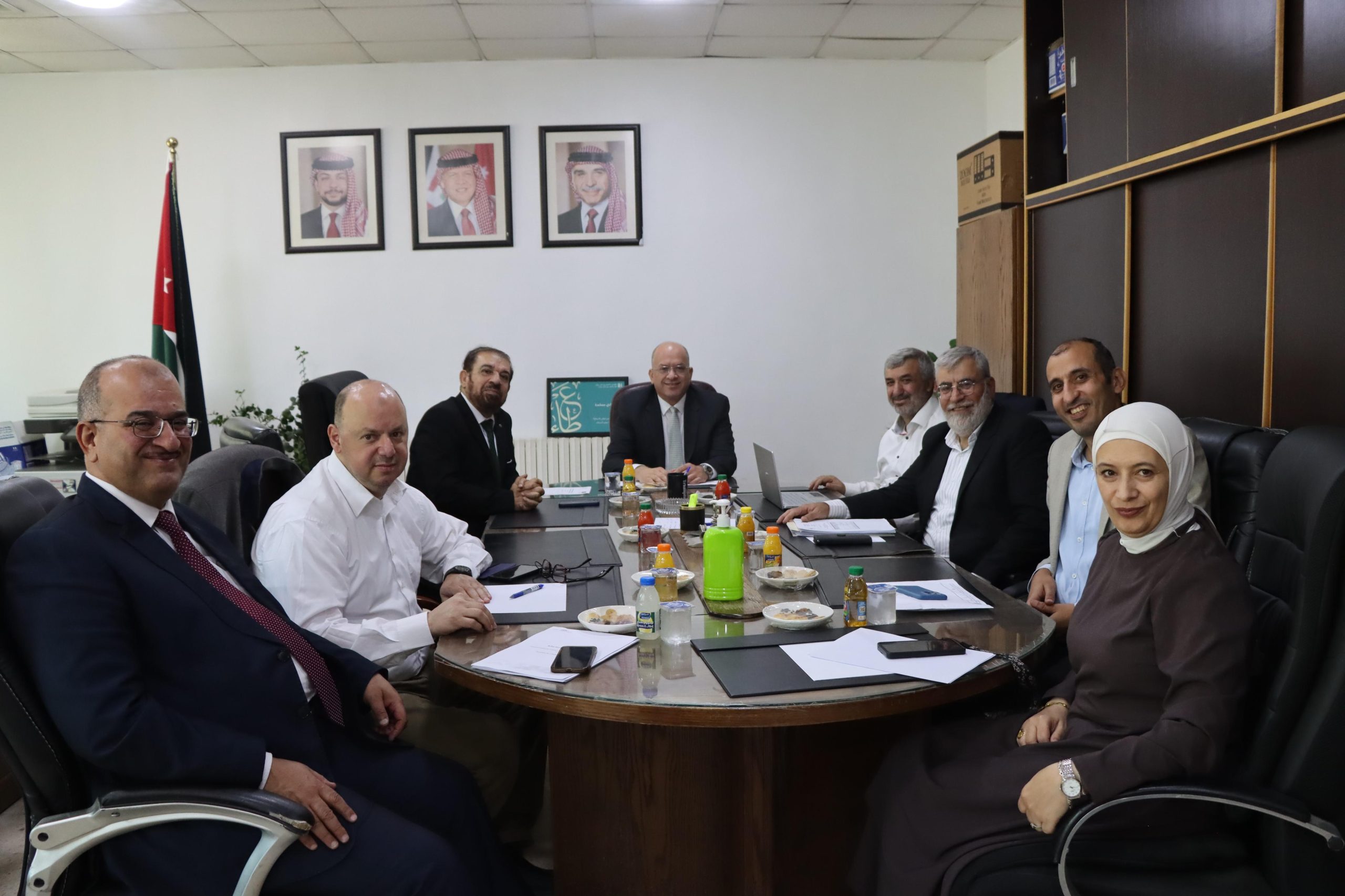
During the visit, the delegation took part in an extensive monitoring meeting for the BASE Project. From An-Najah’s side, the discussions were led by Dr. Abdelhaleem Khader, BASE Project Coordinator, together with Prof. Munqez Shtaya, Dean of the Faculty of Science, and Prof. Saed Khayyat, Director of the Grants and International Projects Center.
Dr. Khader delivered a comprehensive presentation highlighting the project’s objectives and progress, noting its contribution to aligning science curricula with Bologna Process standards, improving graduate employability, and promoting collaboration between Palestinian, Jordanian, and European universities. Prof. Khayyat emphasized the vital role of European support in driving higher education reform, while Prof. Shtaya pointed to the project’s importance for the Faculty of Science and reaffirmed the dedication of both faculty and administrative teams to achieving its goals.
The delegation praised the BASE Project as a pioneering initiative to elevate the quality of higher education in Palestine and Jordan, particularly within science faculties. The visit concluded with a technical session involving the National Accreditation and Quality Assurance Commission, which focused on accreditation procedures and the recognition of qualifications under a Bologna-aligned system.
This monitoring visit reflected the strong commitment of An-Najah National University and its partners to advancing educational reform, building institutional capacity, and strengthening international cooperation—ultimately serving students, academics, and society at large.