An-Najah National University has adopted a redesigned three-year Bachelor’s Programme in Applied Chemistry, developed in line with the principles of the Bologna Process and as part of the university’s ongoing efforts to modernize academic programmes and strengthen their relevance to students, further study, and the labour market.
The redesigned programme is structured around clearly defined and measurable learning outcomes and promotes alignment between learning outcomes, teaching and learning methods, and assessment approaches. It also combines theoretical knowledge with laboratory and applied training, with an emphasis on practical competencies and skills relevant to graduates’ future academic and professional pathways.
The programme incorporates key Bologna principles related to student-centred learning, programme structure, learning outcomes, quality assurance, academic recognition, and compatibility with European higher education frameworks. The three-year structure also provides students with a clear pathway for progression to postgraduate studies.
This development is directly aligned with the objectives of the BASE Project, funded by the European Union through the Erasmus+ Programme. BASE supports partner higher education institutions in Palestine and Jordan in applying Bologna Process principles and strengthening institutional capacities for the development and modernization of science programmes.
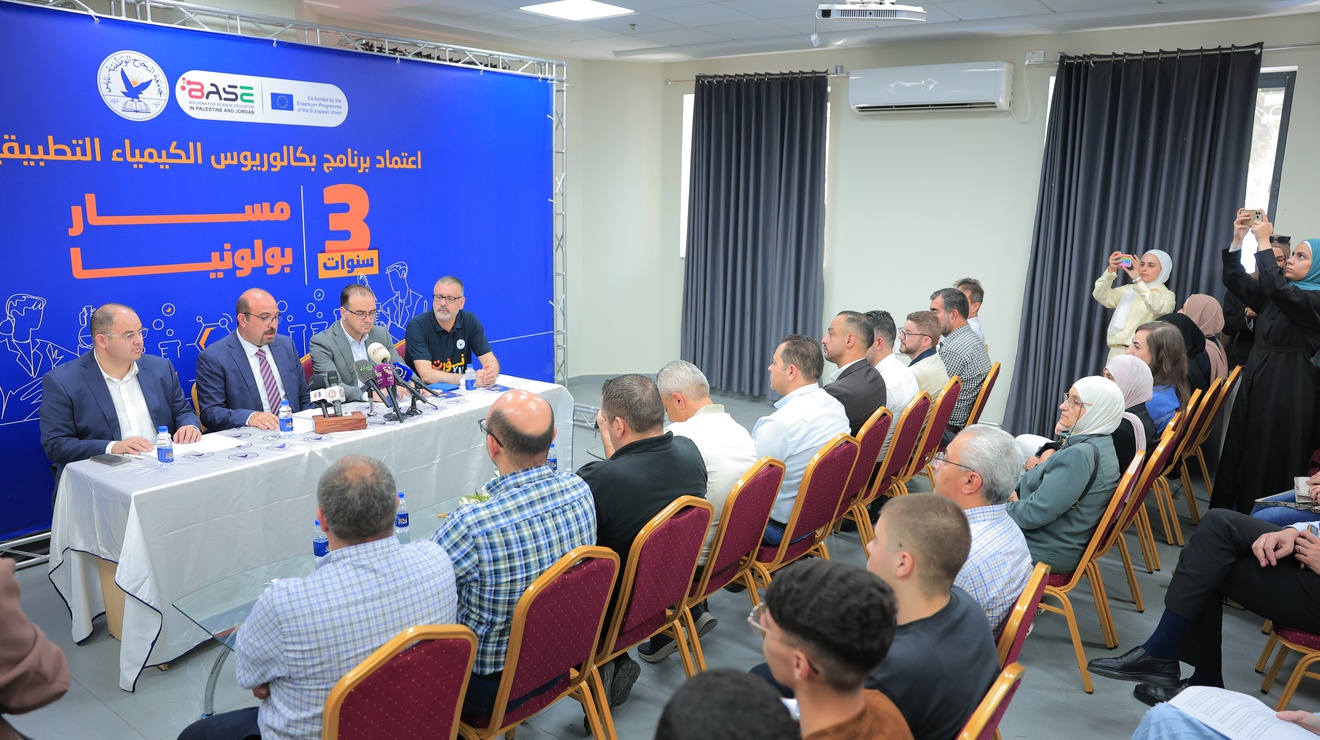
The development and adoption of the redesigned programme were presented during a press conference held at An-Najah National University on 18 August 2026. The event presented the programme’s new academic structure and its alignment with Bologna principles, as well as the broader role of the BASE Project in supporting the modernization of higher education programmes.
The adoption of the three-year Applied Chemistry programme provides a practical example of the implementation of the Bologna Process at the institutional and programme levels and contributes to the broader activities of BASE aimed at enhancing the quality, compatibility, and relevance of higher education programmes.
Further information:
An-Najah National University – Official Announcement