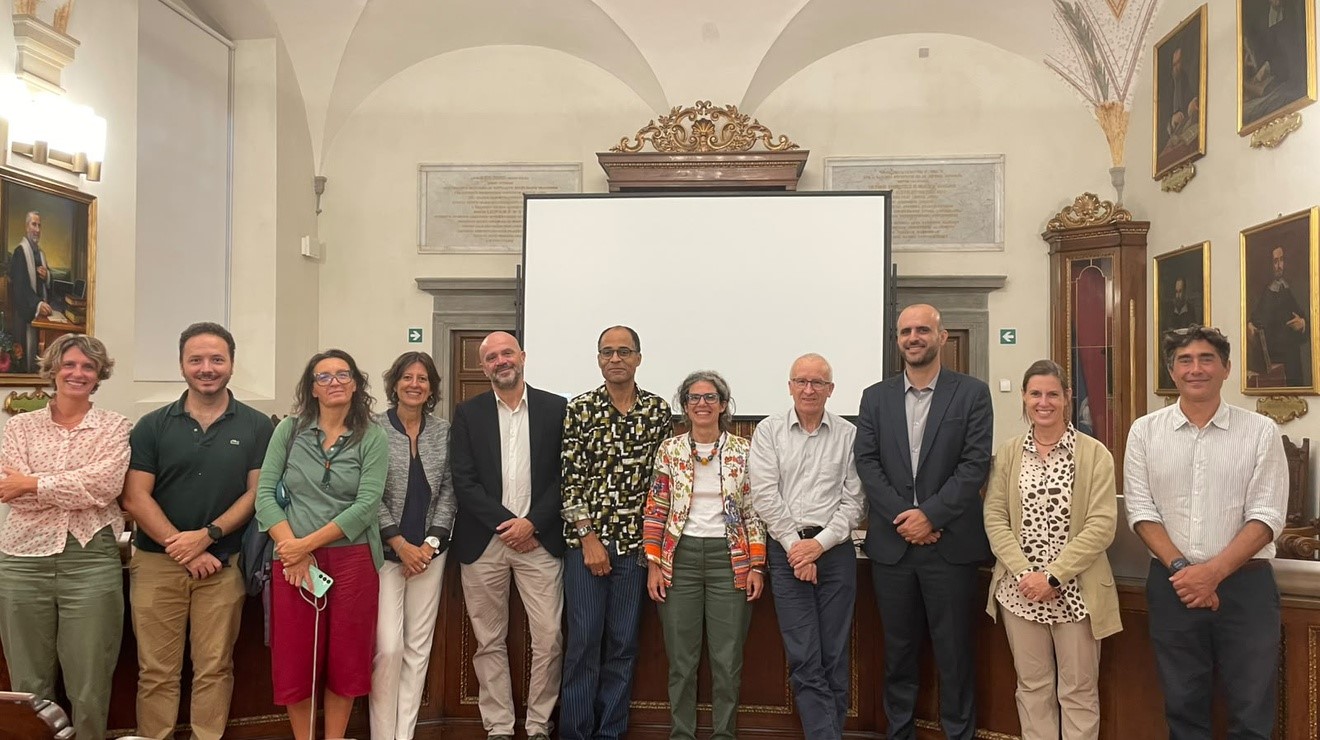
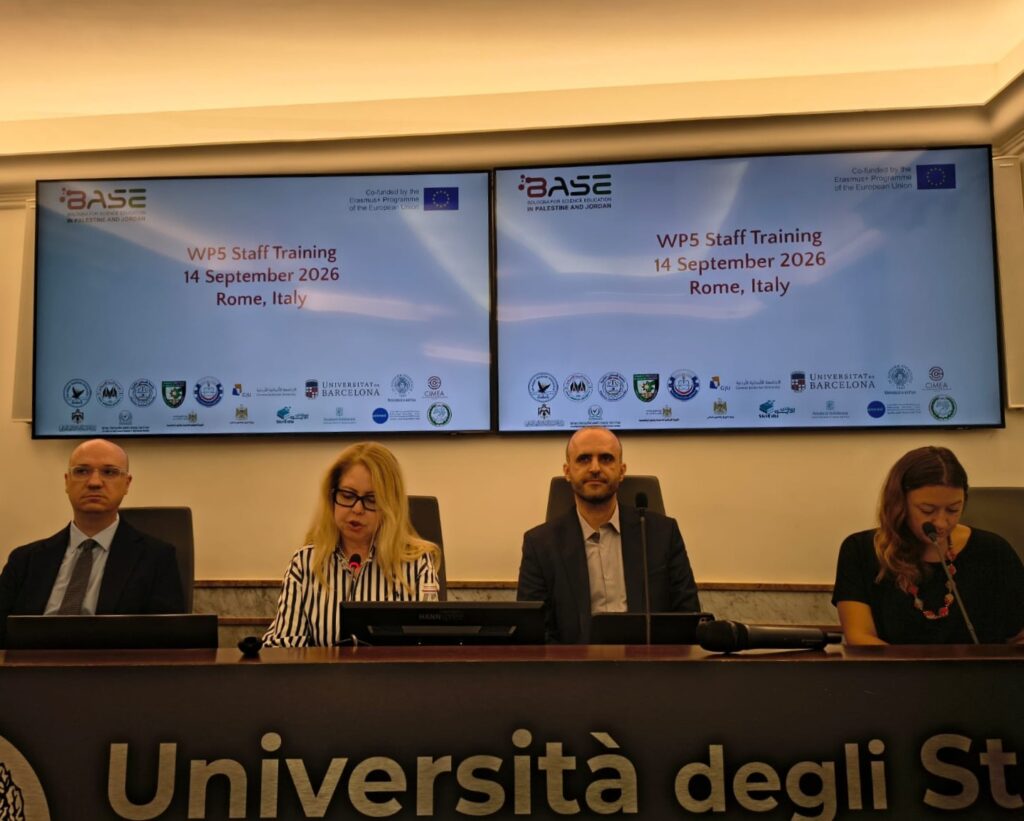
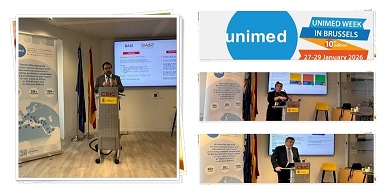
The BASE project shared its experience in equitable international cooperation at a seminar hosted by the University of Pisa, Italy, on 17 September 2026. The event provided an opportunity to disseminate project achievements, exchange lessons with European academics, and contribute to discussions on sustainable partnerships in higher education.
Held at Palazzo La Sapienza, the seminar, “Equitable Partnerships to Address Global Challenges: Perspectives from Research, Education and International Cooperation,” was organised by the University of Pisa’s Circle U. team in collaboration with the Interdisciplinary Centre for Peace Sciences (CISP).
Dr. Abdelhaleem Khader, Associate Professor of Civil and Environmental Engineering at An-Najah National University and BASE Project Coordinator, presented the project as a practical example of how international partnerships can strengthen local ownership, shared responsibility, and lasting institutional capacity.
Sharing Experience: Equity in Project Governance
Drawing on BASE’s implementation in Palestine and Jordan, Dr. Khader explained that equitable partnerships depend on how projects are governed: who holds legal and financial responsibility, how resources are allocated, and how partners participate in decision-making.
An-Najah National University coordinates BASE, signs the grant agreement with the European Commission’s executive agency, and assumes legal and financial responsibility for the consortium. This arrangement places a Palestinian institution at the centre of project leadership and accountability.
The accreditation and quality assurance bodies in Palestine and Jordan participate as full consortium partners, with defined responsibilities and dedicated budgets. Their involvement embeds regulatory expertise within the project from the outset and supports the integration of its results into national higher education systems.
Academic programme design remains the responsibility of the universities that will deliver the programmes. European partners contribute benchmarking and academic staff capacity building, supporting locally developed curricula. Under the project’s lump-sum funding model, each partner’s funding is linked to completion of its assigned work packages.
Capitalising on Results for Lasting Institutional Impact
A central message of the presentation was that the value of an international partnership should be assessed through what continues after funding ends.
BASE has supported the development of seven new bachelor’s programmes across six universities in Palestine and Jordan. Designed by the institutions responsible for their delivery, the programmes have received official accreditation from the respective national authorities.
Teaching is scheduled to begin in the forthcoming academic year. The programmes are intended to remain part of the participating universities’ academic provision beyond the project’s completion in October 2027, translating project results into sustained educational opportunities.
The Pisa seminar therefore supported BASE’s capitalization efforts by sharing both its academic achievements and the governance practices that helped produce them. These lessons offer useful reference points for institutions seeking to develop international cooperation grounded in local priorities, institutional ownership, and long-term sustainability.
Connecting Experience Sharing with Staff Development
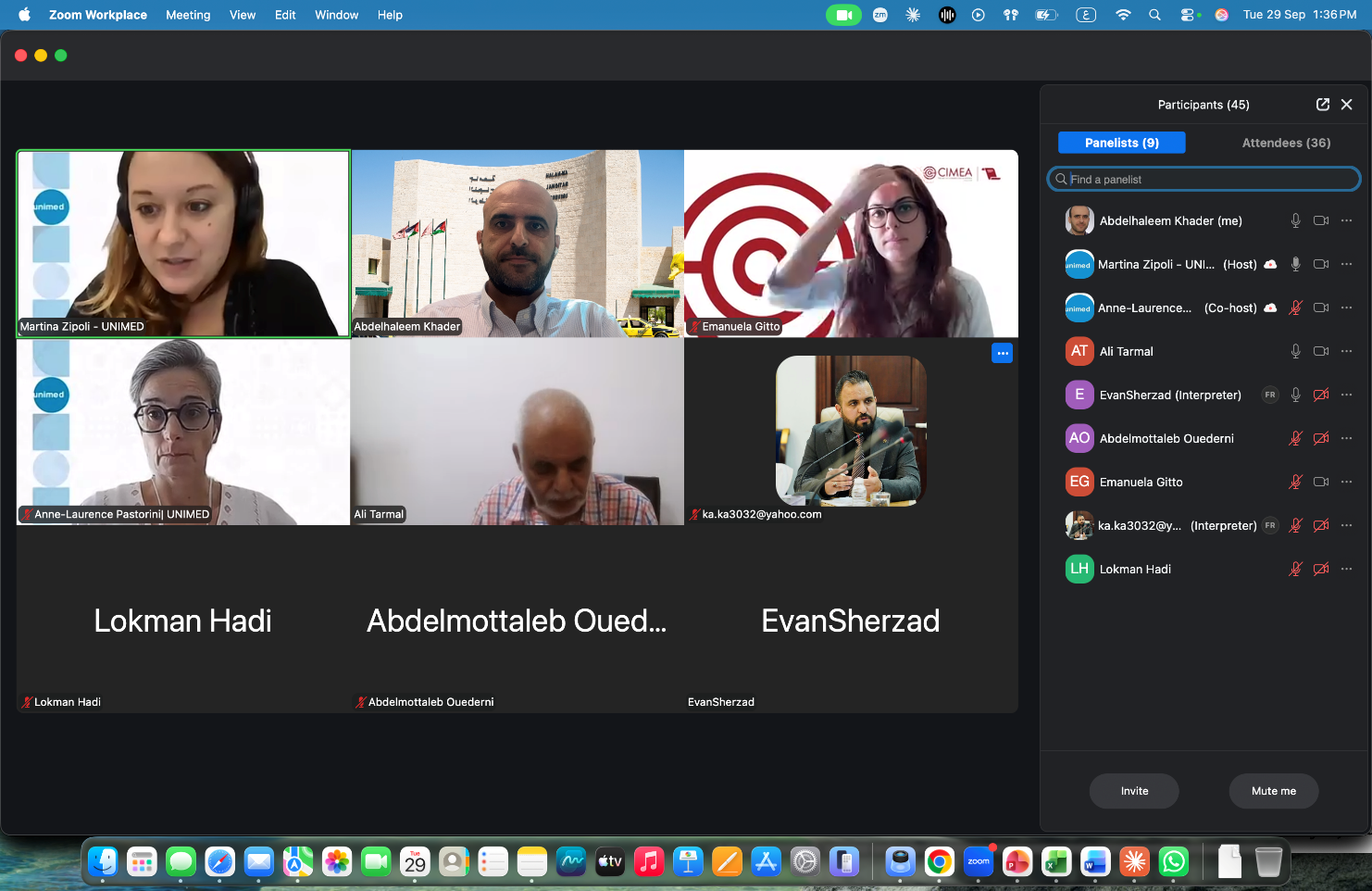
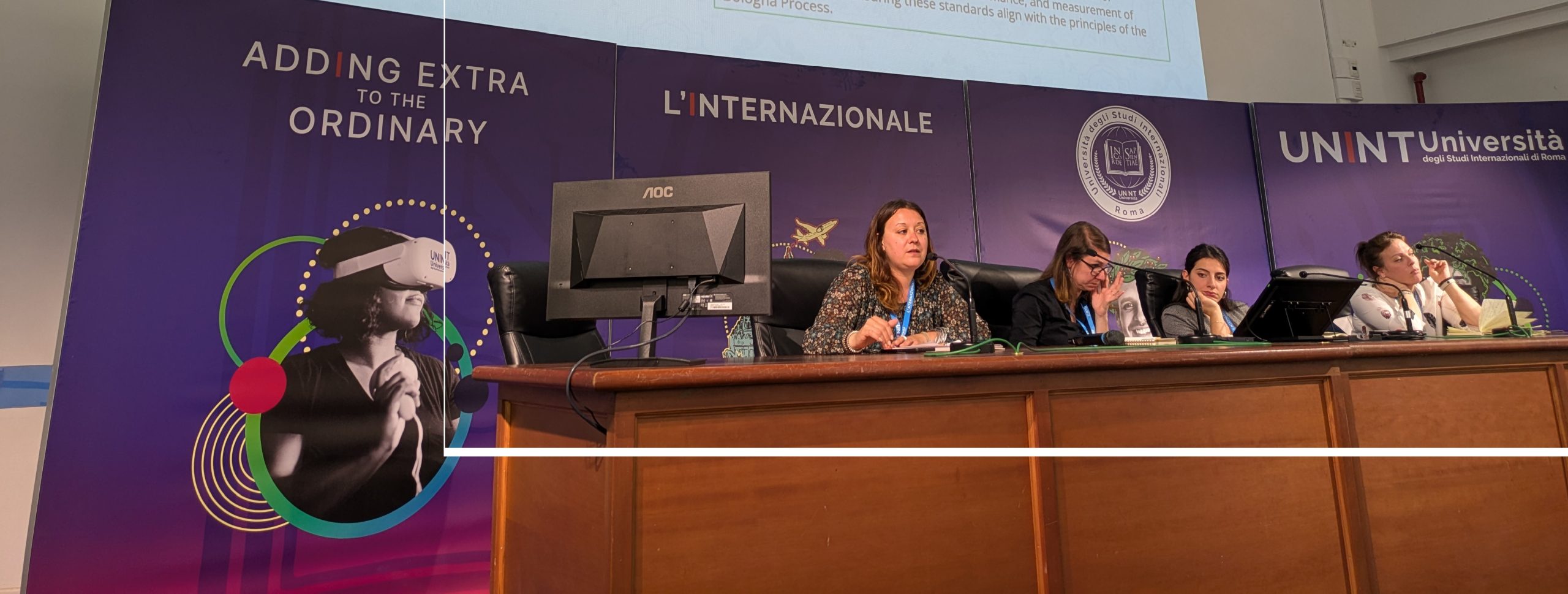
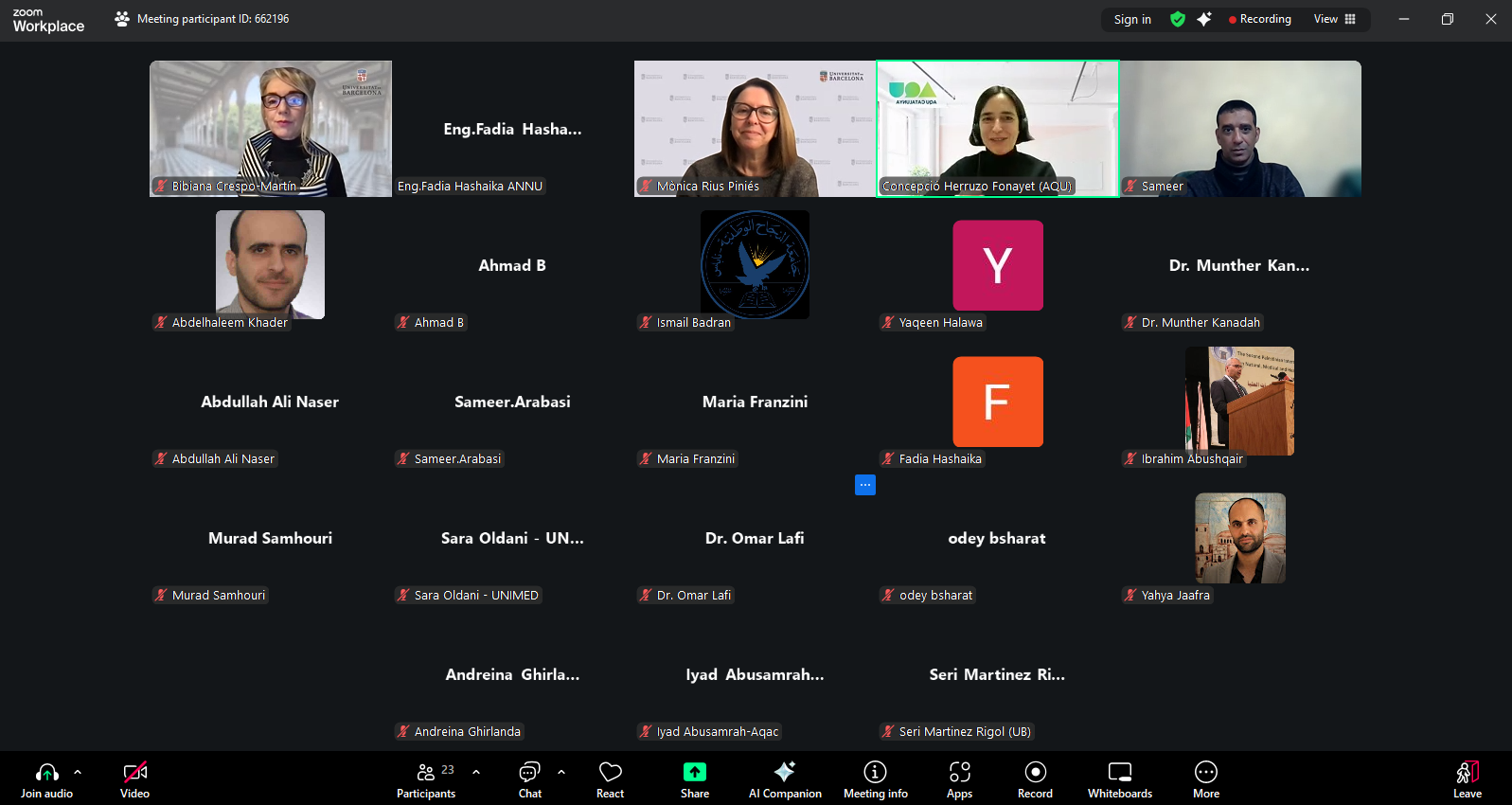
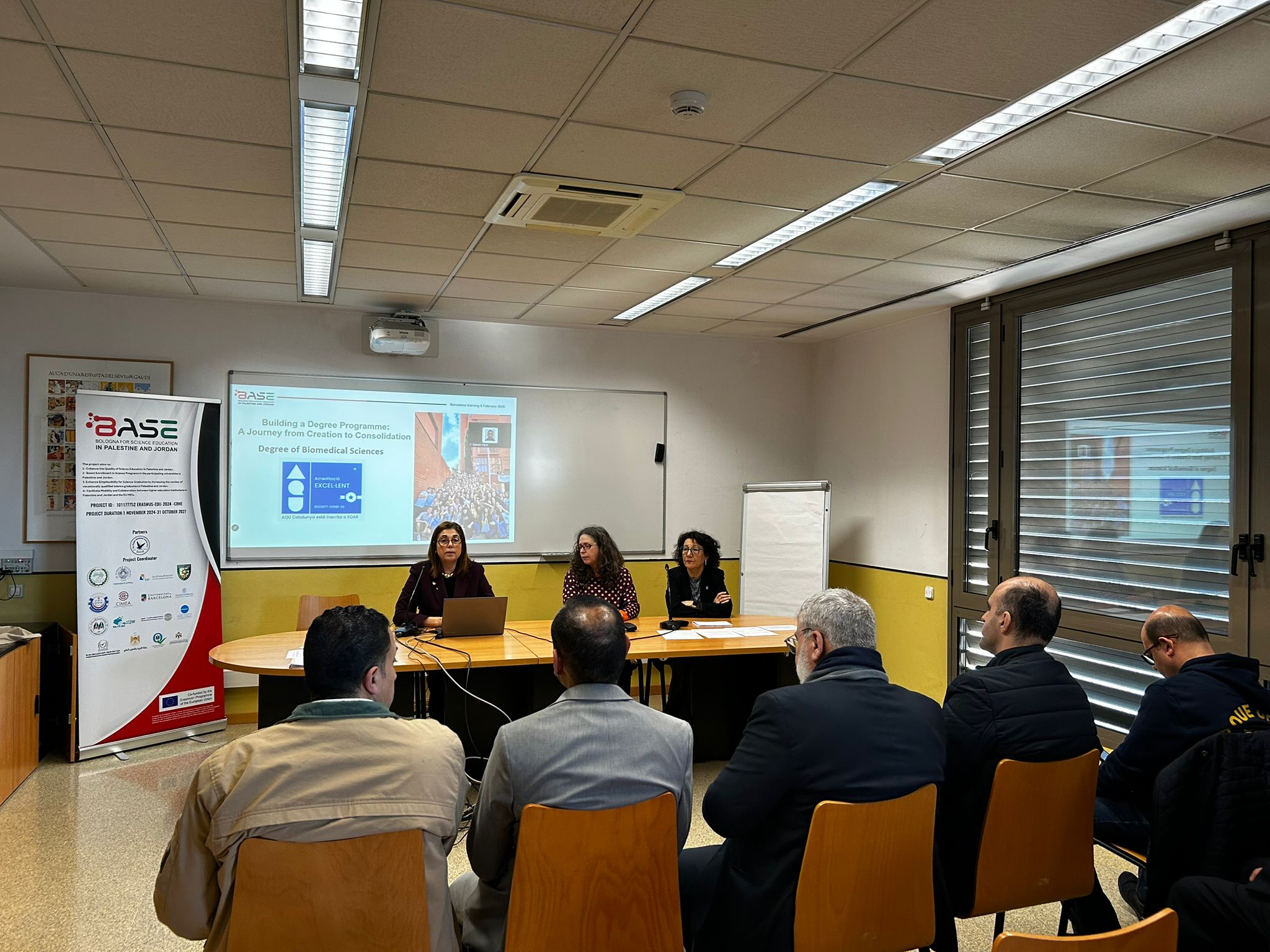
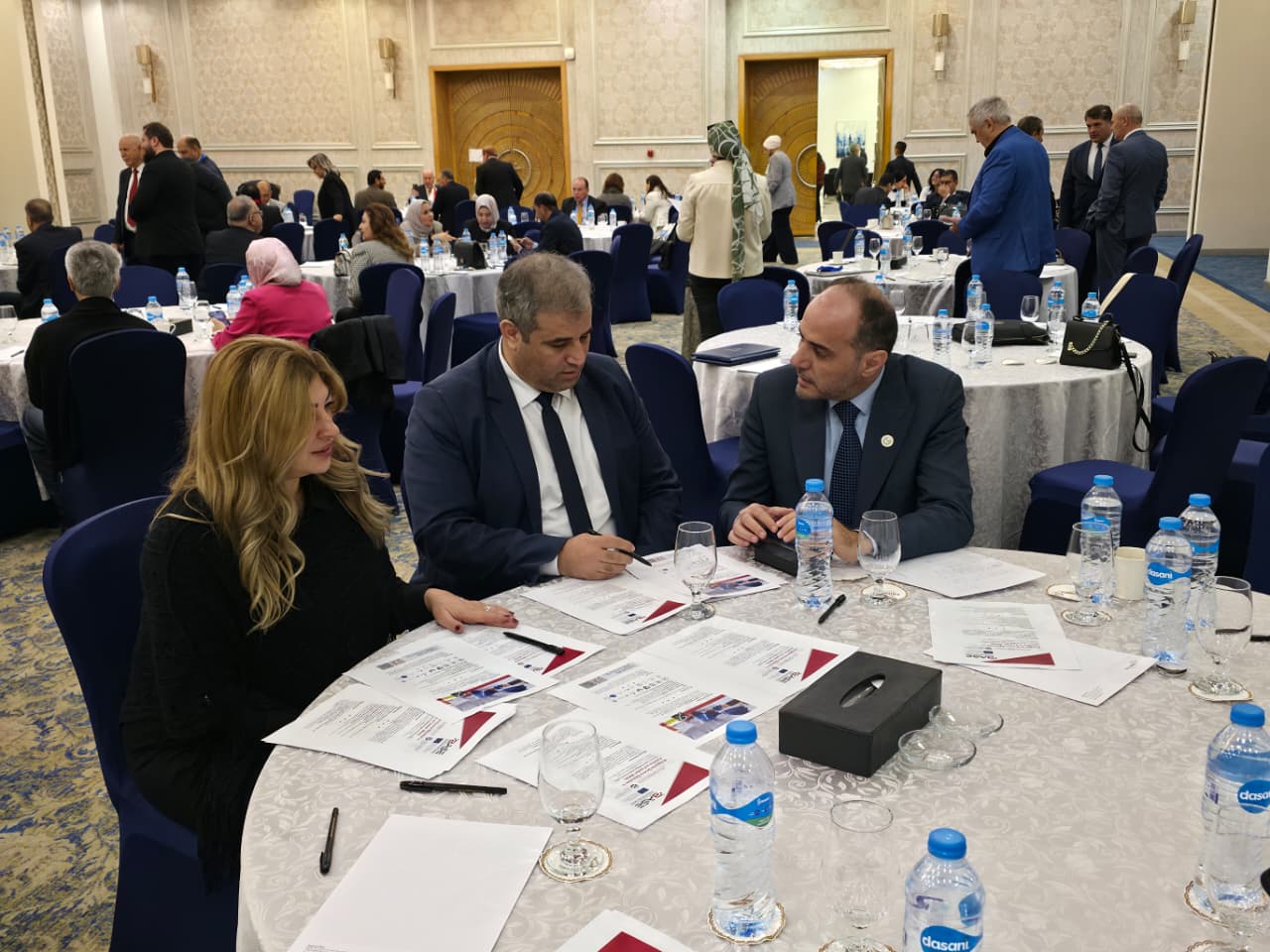
The seminar coincided with BASE’s academic staff training week, held in Rome and Pisa from 14 to 17 September 2026, with partners from Palestine, Jordan, and Europe.
The training focused on preparing academic staff to teach the newly developed programmes, supporting the project’s transition from curriculum design to implementation. Bringing training and experience sharing together connected the dissemination of results with the practical preparation needed to sustain them.
Regional and International Recognition
BASE—Developing Science Programmes in Higher Education Institutions Following the Bologna System in Palestine and Jordan—is funded by the European Union through the Erasmus+ Capacity Building in Higher Education programme and coordinated by An-Najah National University.
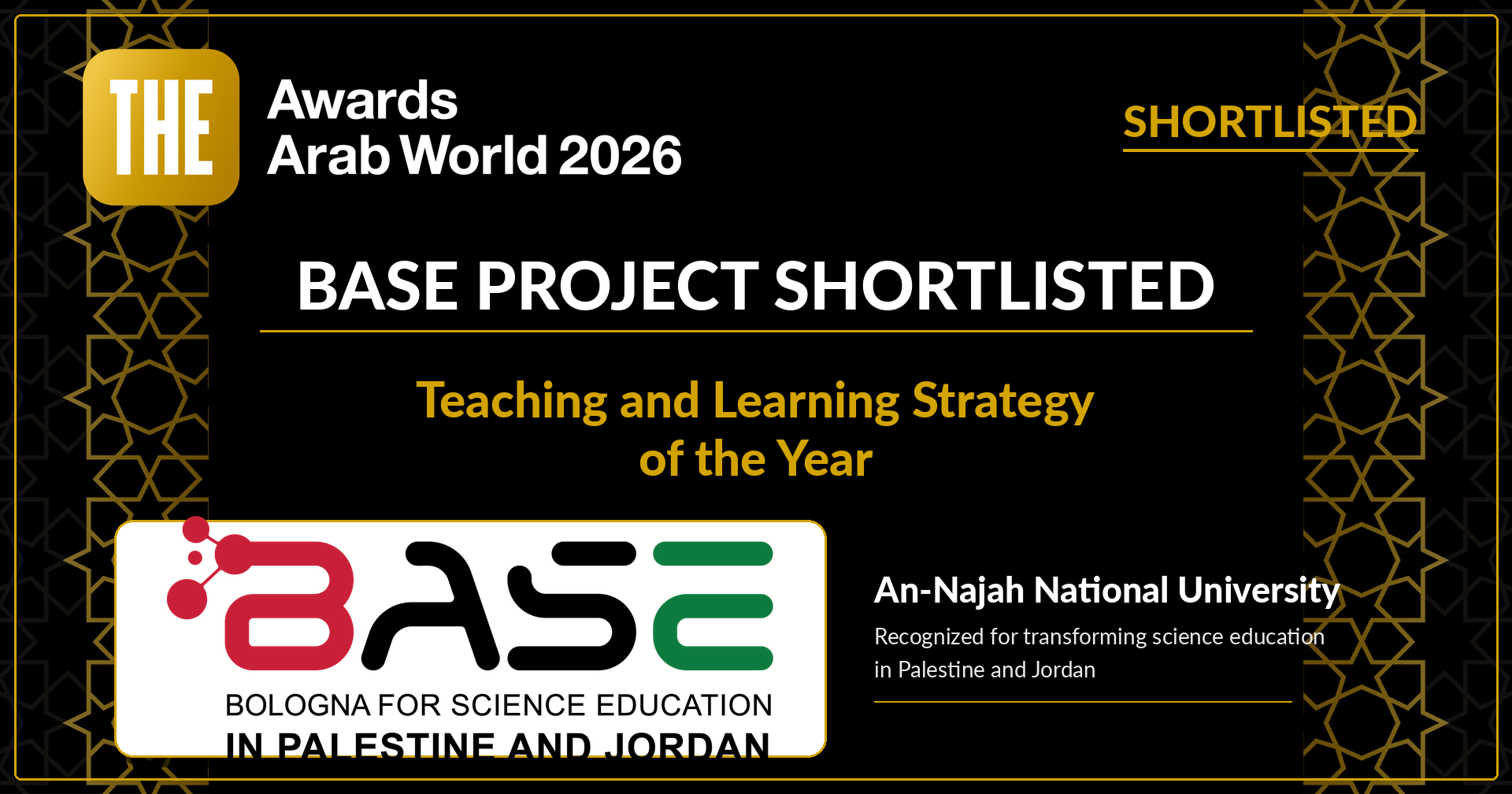
The project has received the Union for the Mediterranean (UfM) label in recognition of its strategic significance and has been shortlisted for the جوائز التعليم العالي, in the استراتيجية التعليم والتعلم في السنة category.
Its participation in the Pisa seminar further extended the reach of BASE’s experience, contributing Palestinian and Jordanian perspectives to the European dialogue on equitable and sustainable higher education partnerships.